

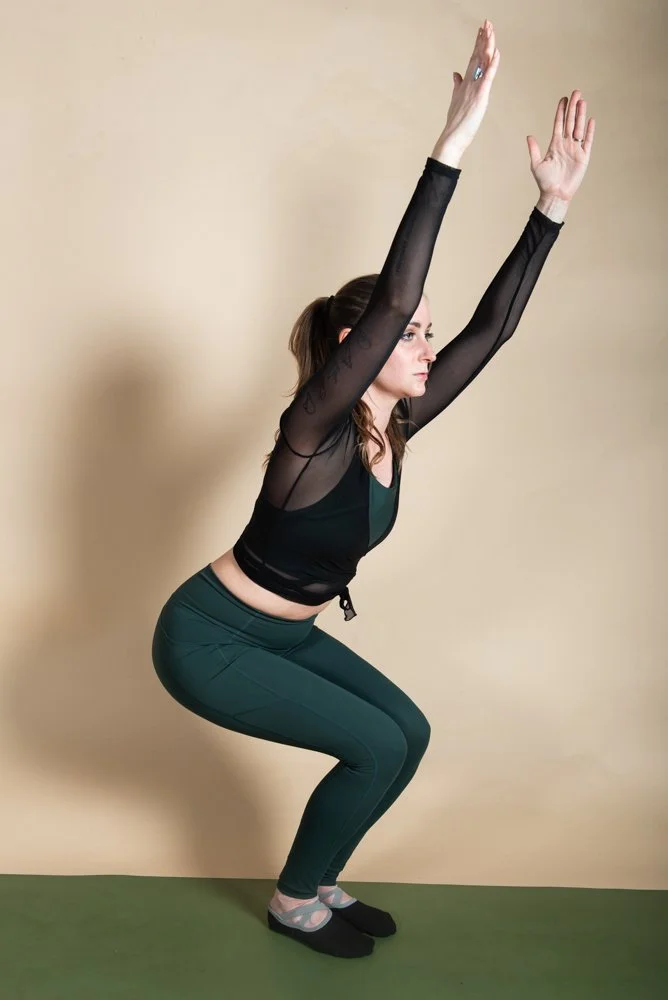
When most people hear “yoga,” they picture someone holding an impressive pose, but that’s only one part of yoga as a practice. In the Eight-Limb Path, Asana is the third limb, and the classical text describes it as holding the body in a steady and comfortable seat (in Sanskrit, “asana” means “seat”). That description has more to do with the nervous system than with the flexibility of your physical body.
I feel very passionate about this Asana because it is such a highly Westernized and appropriated concept. Asana is meant to prepare the body for meditation, to be seated in a form that can be held for contemplation and reflection. Placing your body in a challenging form allows you to expand your distress tolerance to become content in a physically challenging position.
As a former lacrosse goalkeeper, I did this all the time. I stood in the crease, focused and present, ready to spring into action and take whatever discomfort might follow - whether that was the sting of the ball hitting my body (which usually meant a save, yay), the pressure to clear the ball out of the defensive zone quickly without a turnover, or the immediate disappointment if the ball went into the goal.
After graduation, I started to notice how my body would naturally tense in non-urgent situations. I was never walking to work, I was rushing to work. My workouts didn’t feel like they were good enough unless I was absolutely exhausted and a sweaty mess afterwards. But why? For what?
My body had regulated to a heightened point of tension as my baseline. My normal state was tense, both emotionally and physically, and my body felt dysregulated without a high-pressure environment. So I subconsciously created high-pressure environments and kept myself stressed out of familiarity. Big yikes.
What Asana Means in a Therapy Session
Many people who come to therapy for anxiety or burnout are not aware of where they hold stress. A clenched jaw, raised shoulders, or a stomach that never quite relaxes can become so familiar that it feels normal.
In yoga-informed psychotherapy, Asana becomes a way to notice these patterns. We are not trying to bend you into a pretzel during session. We are looking for the moments when the body is steady but not rigid, and comfortable without collapsing. This is called building a window of tolerance.
Take Care Case Example
A former professional ballet dancer came to therapy describing constant tension and trouble “switching off” after work. She had been told by her physician that her headaches and chronic sinus infections were likely stress-related, with inflammation weakening her immune system. In session, I observed her posture and invited her to notice her posture, as well. She noticed how she was sitting on the edge of her chair, as though ready to leave at any moment. Her back was straight, and she commented that she felt rigid.
I invited her to try moving her shoulders up and down to notice how that might feel. After doing just a few shoulder rolls, her eyes went wide with the recognition of how tense her shoulders had been. We practiced finding a seat that was supportive and steady, upright without being rigid, and she described the noticeable difference in how calm she felt. Her “homework” was to actively implement shoulder rolls with slow breaths throughout the day while seated at her desk, and over the next few weeks I noticed her leaning back in her chair during our sessions.
Try This
Sit or stand with your feet grounded and your spine lengthened. Scan from your jaw to your shoulders to your belly. Ask yourself, “Where am I bracing?” Then soften one area while keeping your posture supported. Maybe create some space between your teeth by unclenching your jaw. This is a simple way to practice steadiness and comfort at the same time.
Next Steps
If you are dealing with burnout, perfectionism, or chronic tension, you can reach out to start a conversation and get booked for your first session.