
Yoga-Informed Psychotherapy for Managing Anxiety and Chronic Stress
A Note on Honoring Yoga’s Roots:
When I integrate yoga into my clinical work, I do so with respect and humility. Yoga has thousands of years of roots in South Asian traditions, and I approach this wisdom as something to honor—not to claim as my own.
I'm a clinician trained in Western psychology who has studied yoga philosophy and somatic practices. I'm not a yoga scholar, and I acknowledge what's been lost in yoga's Western adaptation. When we explore the Yamas, Niyamas, and the rest of the 8 Limb Path in therapy, we're engaging with an ethical framework that has guided practitioners for millennia—not treating it as a wellness trend.
This distinction matters to me because authenticity matters to me. I'm informed by yoga's wisdom, and I strive to practice and teach with respect for where these traditions come from.
What is Yoga?
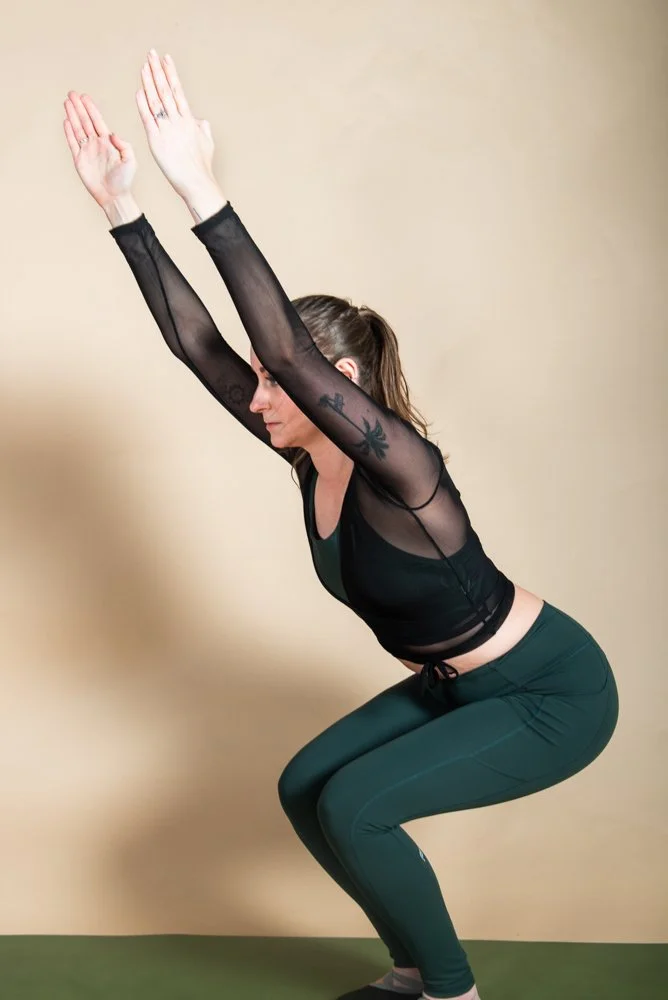
The word yoga comes from the Sanskrit root yuj which means “to yolk,” or “union,” or “to join.” Yoga is more than just an exercise class with impressive poses - it is an ancient practice that is over 5,000 years old that emphasizes the unity between mind, body, and spirit.
Yoga is rich with history with origins in ancient India and has many different forms of practices and philosophies. It was once a sacred spiritual discipline that was passed down from teachers to their selected students but has become more accessible in recent decades.
With improved accessibility, yoga has also become more commercialized and (unfortunately) appropriated. I do my best as a student and teacher to honor the history of the practice while humbling myself with the understanding that there is always more to learn.
What is Yoga-Informed Psychotherapy?
Yoga-informed psychotherapy is a combination of somatic strategies for nervous system regulation with evidence-backed talk therapy modalities. This trauma-informed, consent-based approach fosters connection between the mind and body for deeper insights and more sustainable healing practices.
No experience necessary, no yoga mats needed, and no exercise involved.
This approach is particularly effective for clients who:
Recognize and talk about emotions but have difficulty actually feeling emotions
Feel disconnected from their body
Notice the physical toll of stress on their body
Can’t seem to calm down or slow down
Feel disconnected from a sense of purpose in their life.
What is the 8 Limb Path?
The 8 Limbs of Ashtanga Yoga are a holistic framework written in the Yoga Sutras of Patañjali. These components of yoga provide guidance along a path toward living a morally disciplined and purposeful life. The 8 Limb Path is not always sequential but is intended to guide practitioners toward the final limb of enlightenment - just like the therapeutic journey is messy and nonlinear with the goal of healing emotional wounds and finding fulfillment.
These different facets of yoga blend well with psychotherapy concepts, particularly Acceptance and Commitment Therapy. Some of these concepts may be relevant and helpful, but each client is different and treatment is tailored to the individual’s needs and is always consent-based. I’ve included common examples of how these concepts may naturally show up in the therapy space without being consciously identified.
Yamas - Ethical Restraints
The yamas are a set of five social ethics, or moral disciplines, for developing ethical standards:
Ashimsa - non-violence or compassion - Would you say any of your negative thoughts about yourself aloud to a friend?
Satya - truthfulness - Maybe it’s time to be honest with yourself about how some relationships are draining you and might not be worth the same amount of your time anymore.
Asteya - non-stealing - Giving your attention to your phone is stealing your attention away from your goals, relationships, health, etc.
Aparigraha - non-greed or non-attachment - The only constant in life is change, and holding on to what no longer serves us keeps us from moving on.
Brahmacharya - moderation - How do you know when you’ve said enough, done enough, or tried hard enough? Moderation allows us to filter out excess, but even moderation needs moderation.
Niyamas - Observances
The niyamas are a set of five personal observances for inner discipline intended to cultivate happiness and self-confidence in daily life:
Tapas- austerity or self-discipline - Show up as you are, but you have to show up.
Saucha- cleanliness or purity - You know that feeling after you take a shower, or step into a bedroom and the bed is made? Yeah, that feel is incredibly helpful for your mental health.
Svadhyaya- self-examination or self-study - How willing are you to look at the patterns in your thoughts and behaviors to make changes?
Santosha- contentment - Sometimes the goal is to go from super negative to simply neutral. It’s okay to not be okay, it’s also fine to just be fine.
Ishvara Pranidhana- surrender - This isn’t giving up, surrender is an active choice to accept circumstances beyond your control to redirect your attention and efforts toward what you can control.
Asana - Postures
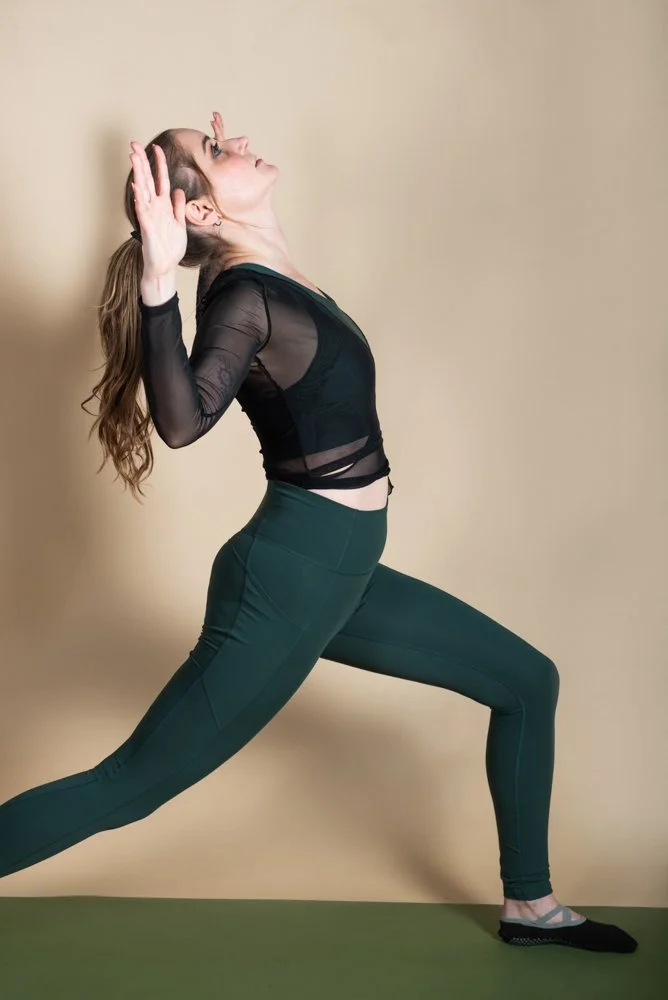
This might be what you automatically associate with yoga - the physical practice of forming poses intended to purify the body and provide stamina, strength. The practice of asana includes a duality of alertness and relaxation, steadiness and ease. The poses facilitate mind-body integration through controlled contractions, stretching, balancing, relaxation, and coordination. Each pose tells a story and was originally intended to be held for long periods of contemplation.
In session, you might be invited to notice how your shoulders seem so tense they’re almost touching your ears when you’re talking about a specific topic, and curiously wonder what it might be like if you were to gently roll them to loosen up the tension.
Pranayama - Breath
Pranayama comes from the Sanskrit words prana, meaning ‘life force,’ and ayama, meaning ‘control.’ Breathing is the physical expression of life force energy. It can be automatic, but controlled breathing directly correlates with nervous system activation and regulation. There are many different types of conscious breath work that may be used for different purposes based on the intention of the practitioner.
Nothing seems quite as stereotypical as a therapist telling you to take a deep breath. But when I encourage you to notice your breathing, it might be by gently observing how quickly you seem to be speaking, as if you’re rushing to get it all out, which sounds like you just ran a distance even though you’re seated. Then wondering what it might be like if we were to slow the pace a bit to create a sense of safety without the automatic urgency?
Pratyahara - Sense withdrawal
Pratyahara is the process of filtering through sensory information to reduce or prevent overwhelm and calm the mind. We experience the world through our senses, and this practice helps us reduce unnecessary input to reduce distractions and find a sense of peace within our own minds.
Have you ever been overstimulated, or under-stimulated? This concept helps with both. You may be invited to soften your gaze or close your eyes, or receive the offered suggestion of using ear plugs or noise canceling headphones in parts of your daily life. We also might turn attention inward to notice bodily sensations rather than external stimulus by noticing how your body experiences different emotions.
Dharana - Concentration
Once the mind has reduced sensory input and settled into a state of calm, it is possible to concentrate on a single point of focus. This intentional attention is held without drifting focus, and gently returning to the chosen focal point when (not if, but when) wandering occurs.
If you have any form of neurodivergence, this may seem nearly impossible, especially when working through an area of discomfort in session. Our brains are wired to keep us safe, so if your brain starts noticing an uncomfortable emotion or a topic deemed ‘unsafe’ for whatever reason, you may consciously or unconsciously avoid it as a means of self-preservation. I may gently redirect our attention back to subjects, emotions, or sensations that might be uncomfortable (depending on your consent, window of tolerance, and the assessed clinical benefit) so we can address, process, and work toward healing what actually needs attention.
Dhyana - Meditation
Meditation is a state of contemplation, reflection, and ultimate presence. It can be a spiritual experience, though to some it is an art form - the art of doing nothing. This state of flow and ease is highly sought out for the restorative healing properties associated with it, yet it takes repetitive practice and radical acceptance to achieve.
A lot of my clients tend to share a similar sentiment - they can’t meditate. Maybe they’ve tried, but they can’t “turn their brain off” so they deem it impossible. If this sounds like you, that’s okay. We may not explore meditation in session, and I’m not going to offer it as a suggestion if you don’t like it. The option is there for those who may be curious, and it is always possible to start with 10 seconds at a time. After all, a baby step is still a step, and meditation takes practice.
Samadhi - Enlightenment
Enlightenment may described as a blissful state of complete alignment and harmony with universal consciousness. Samadhi is the deepest state of meditative oneness and mental stillness and is seen as the goal of meditation. In some schools of thought, enlightenment is practically unachievable to most mortals in this lifetime, and for others it is a brief state that can be reached repeatedly, if only momentarily, through dedicated meditation practice.
Look, I’m not going to falsely claim that you’ll reach a state of enlightenment through therapy. That’s way beyond my training and scope of practice. But there are times in session (moments that honestly keep me going) when clients have an “ah-ha” moment - when they gain insight, step into their power, notice their growth, or get in touch with an unfamiliar part of themselves - that seems like a moment of enlightenment. It’s not enlightenment as a state of being or ultimate evolution of self, but it’s worthwhile. Those moments can happen, and it’s pretty electric when they do.
More common questions about yoga-informed psychotherapy:
-
Yoga-informed psychotherapy is provided by a licensed mental health clinician (like me, an LCPC) who integrates yoga principles and somatic techniques into clinical therapy. I'm clinically trained in mental health treatment modalities (CBT, ACT, & IFS) and have special training in yoga philosophy.
Yoga therapy is provided by a yoga therapist who may not have clinical mental health training. They focus on yoga practices as the primary intervention. Yoga-informed psychotherapy combines evidence-based clinical treatment with yoga principles for comprehensive healing that addresses both your mind and nervous system. Unfortunately, yoga therapy is not recognized as a health profession at this time, but it can still be helpful.
If you are interested in yoga therapy, I would suggest finding someone with the credentials C-IAYT. This means they are a Certified Yoga Therapist through the International Association for Yoga Therapists with 800 hours of training over two years.
-
In a yoga class, the focus is on physical poses, breath work, and mindfulness, typically in a group setting. While this may be beneficial for many students, it's not personalized to your specific mental health needs.
In yoga-informed therapy, we're doing something completely different. I'm integrating yoga principles—like breath work, body awareness, and the philosophy of the 8 Limbs—with individualized clinical treatment for your specific struggles with anxiety, burnout, or whatever brought you here. It's one-on-one, it's tailored to you, and it's grounded in clinical expertise, not just physical practice.
No poses required. No mats needed. Just personalized healing.
-
Nope! N preparation needed. You don't need to have yoga experience, practice yoga, or even like yoga. You don't need to wear special clothes or bring anything.
Simply show up as you are. If we work together, I might invite you to notice your breathing, check in with your body, or try a simple grounding technique—but these are completely optional and tailored to what feels comfortable for you. We always move at your pace with your consent.
-
That's completely okay. Many of my clients come in saying they "can't meditate" or "don't like yoga," and that's fine. I won't force yoga practices into your treatment if they don't resonate with you.
What I'm offering isn't about becoming a yogi or mastering yoga poses—it's about using somatic techniques to help your nervous system regulate and your body feel safer. If certain practices don't work for you, we'll find other approaches that do. Your comfort and consent matter more than any specific technique. I love how a lot of the “woo-woo” is actually grounded in neuroscience, but I get that it’s not for everyone.
-
Yes. Yoga-informed psychotherapy is grounded in neuroscience and combines evidence-based clinical therapies (CBT, ACT, somatic therapy) with yoga principles that research shows can help regulate the nervous system. Studies demonstrate that combining somatic practices with talk therapy is effective for anxiety, trauma, and stress-related conditions. I’m happy to send you the research if you send me a message.
I use trauma-informed, consent-based practices rooted in clinical training, not just wellness trends.
-
So many! Yoga-informed psychotherapy is particularly effective for calming anxiety, burnout recovery, decreasing and managing chronic stress, addressing performance anxiety, healing trauma responses, and nervous system dysregulation. It's helpful for anyone who experiences emotions in their body—tension, tightness, numbness, or being "on edge."
It's especially valuable for people who feel disconnected from their bodies or who struggle to regulate their emotions despite being intellectually aware of the issue.
-
Sessions look similar to traditional therapy—we talk, I listen for cues or indictors based on what you share, and I offer evidence-based interventions so we can work through what brought you in. The difference is that I might:
Invite you to notice how emotions show up in your body
Use breath work techniques to notice and calm sympathetic nervous system activation
Guide you through grounding or somatic awareness practices
Reference yoga principles (the 8 Limbs) when relevant to your healing
Everything is optional, consensual, and tailored to your needs.